DAF in Action
DAF Used Trucks building up a head of steam
With its Used Trucks division, DAF has added another impressive string to its bow in a relatively short space of time. Used DAFs still have plenty of mileage left in them, especially when they have been serviced by a DAF dealer. DAF in Action spoke with Gerrit-Jan Bas from PACCAR Financial, who was partly responsible for setting up the expanded Used Truck programme in 2017.
By Guus Peters
Photos: DAF, Marieke van Grinsven
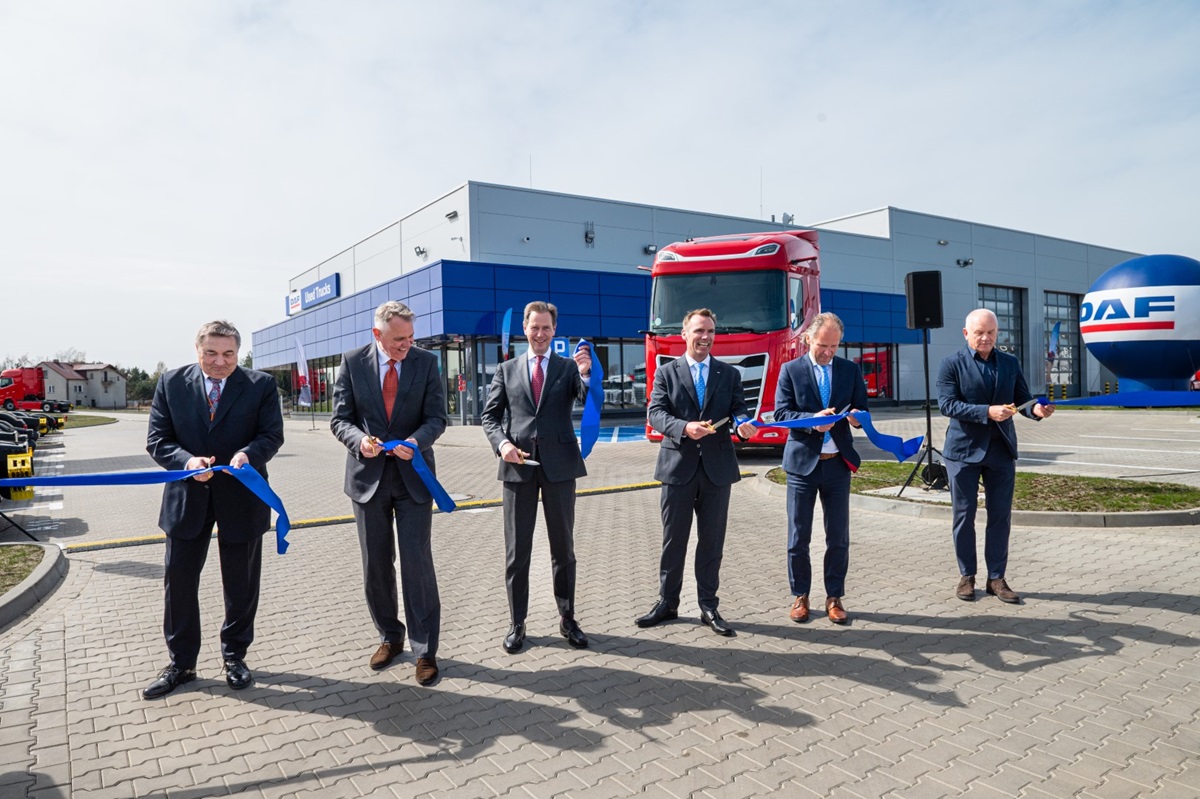
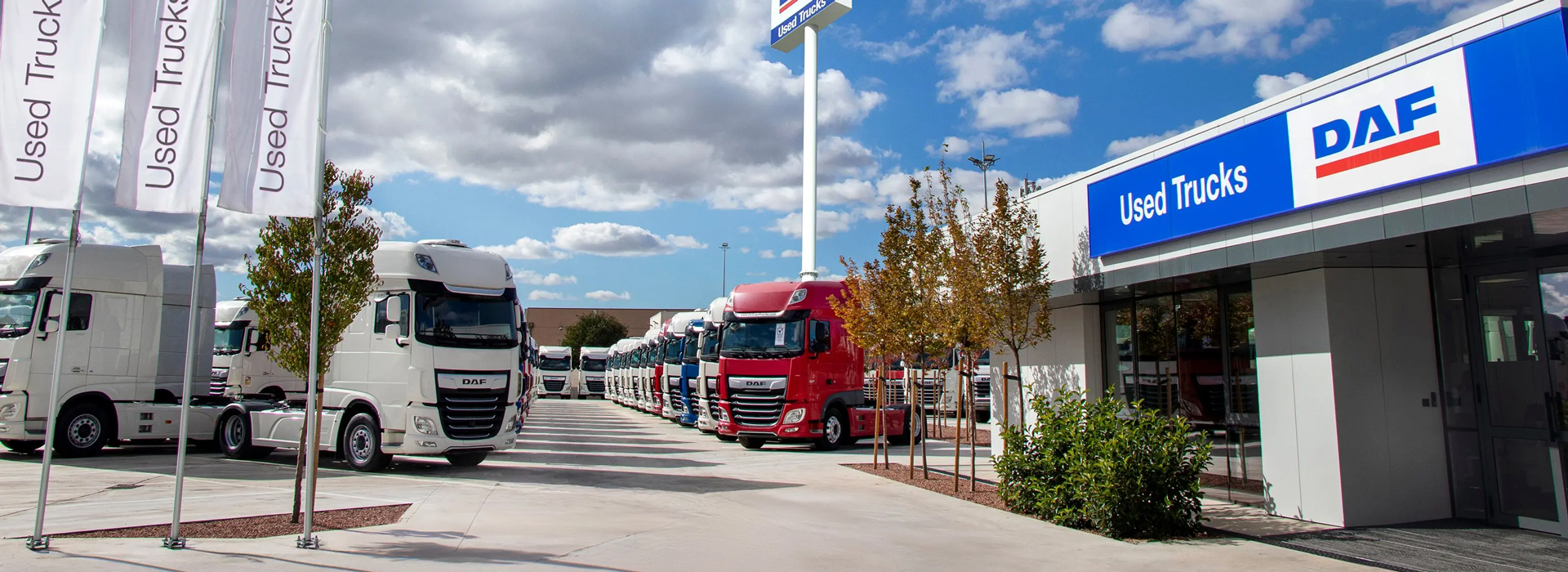
DAF currently has seven Used Truck Centers spread across Europe. From Madrid to Warsaw and from Lyon to Prague. Many used trucks are now being sold through these centres and the DAF dealer network. “A formula for success“, according to Bas. “We know the vehicles, we know their history and we get them into mint condition. Each truck that is given a second or even third life at our Used Trucks Centers or dealers is an excellent and reliable choice for our customers”, says Bas.
PLENTY OF MILEAGE
Used DAFs come with a full warranty. “The customer can choose a warranty of between three months and two years on the powertrain or on the complete vehicle“, explains Gerrit-Jan Bas. It’s an excellent option because a DAF truck will generally have clocked up no more than 400,000 kilometres before it is traded in. “That amount of mileage usually means ‘end-of-life’ for a car, but a DAF is only starting to get into its stride at that stage. It still has plenty of mileage left in it.”
"If you want to hit the road tomorrow, a Used Truck can be arranged very quickly"
Gerrit-Jan Bas
PACCAR Financial Europe
WEBSITE
An important feature is the website dafusedtrucks.com. It provides a complete overview of the used trucks on offer. “Our website has an excellent search engine for certain specifications”, says Bas. “We can almost always locate the truck that meets a customer’s needs somewhere in Europe. And if the customer requires an extra option, such as a parking aircon, the DAF dealer can provide it. Our service doesn’t end there, either. We can also arrange financing in the countries where we have our own financial partner. We offer tailor-made solutions across the board”.
Gerrit-Jan Bas is also keen to point out another benefit of DAF Used Trucks: their speed of service. “If you want to hit the road tomorrow, a used truck can be arranged very quickly. Many customers are already aware of the benefits of a truck with some mileage in the clock, and many comment, “If the truck I’m looking for becomes available, make sure to let me know!” It means that we have often already sold a truck before it has even been traded in.”
More stories
More stories
Hellmold & Plank goes electric for long distance haulage
The German transport company Hellmold & Plank is taking major steps towards a zero-emission future. With the acquisition of its first DAF XG+ Electric, the family business in Giessen has underlined its ambition to make its long distance haulage 100% sustainable. A challenging but also inevitable decision, according to Peter Plank.
By Frank Hausmann
Peter Plank, owner and director of Hellmold & Plank, made the decision to acquire their first electric trucks as far back as 2023. “A matter of biting the bullet,” he says without hesitation. He was fully aware that the introduction of new technologies would bring new challenges, but he also knew the market was going to change dramatically. More and more clients now expect transporters to make a contribution to their sustainability goals. There is increasing pressure as a result of regulations arising from CO2 reports that are making the ecological footprint of logistics chains very clear. Economic factors are also playing a role and electric vehicles are becoming more popular, partly as a result of the high cost of diesel.
LEARNING FROM THE FIRST GENERATION
The first impressions of electric trucks were not always positive. Businesses struggled with breakdowns, the limited availability of parts and a lack of expertise in the service chain. Drivers of the first generation of light electric trucks were particularly critical. Their concerns were common knowledge: limited range, uncertainty regarding charging options and the fear of unplanned downtime. But the pace of development began to pick up and general opinion shifted dramatically when the next generation of electric trucks arrived.
NEW GENERATION MAKING A DIFFERENCE
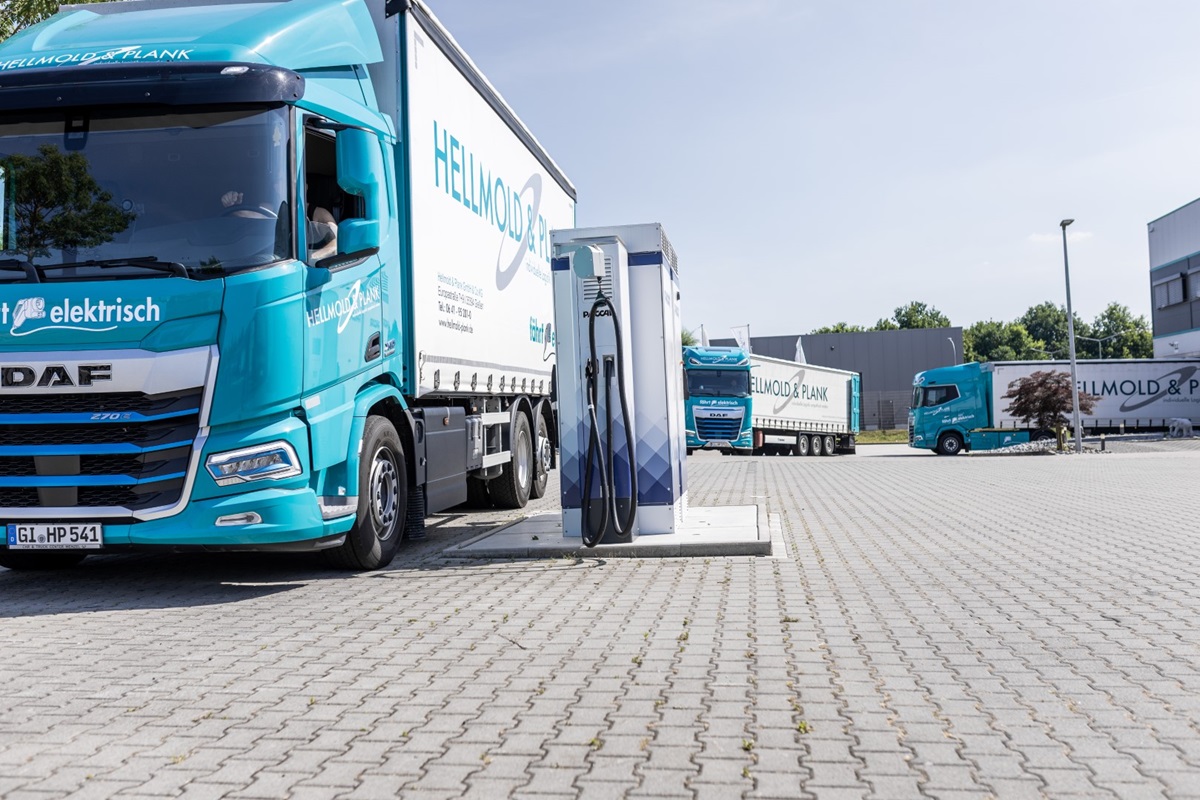
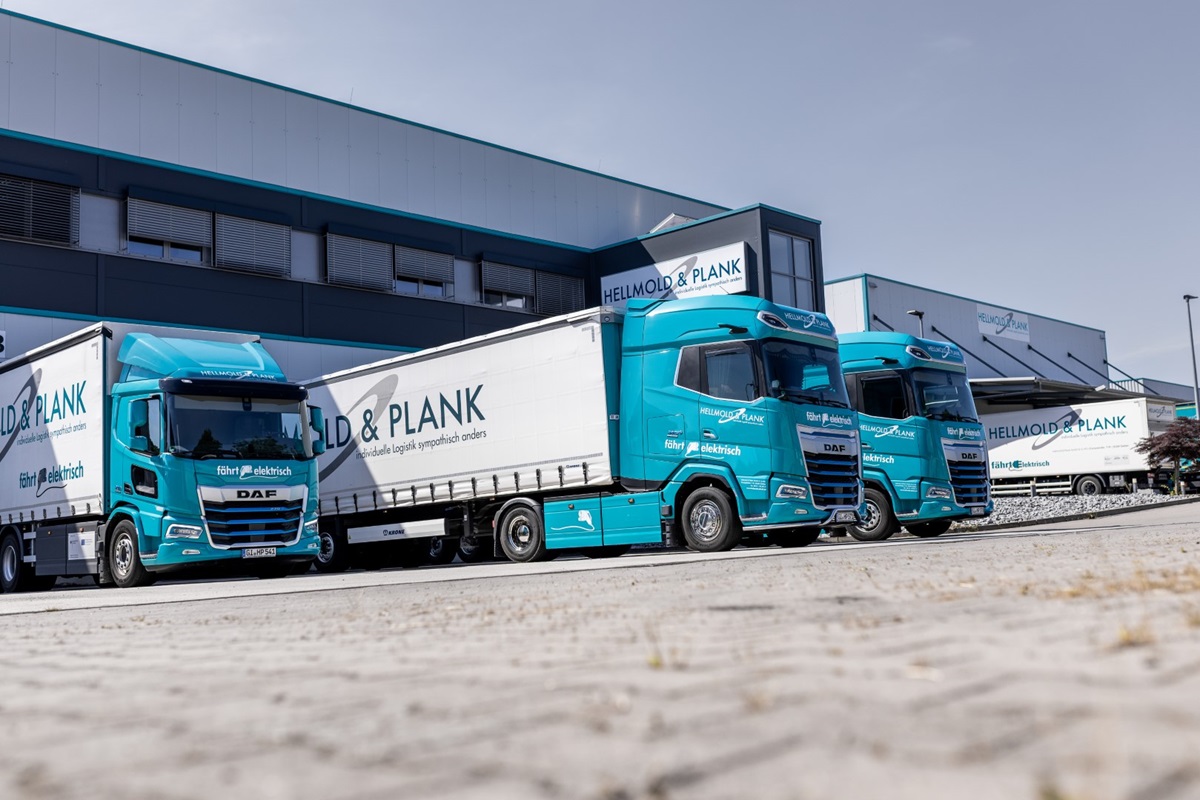
Hellmold & Plank was the first transporter to acquire a DAF XG+ Electric and they currently have two of these tractors with the largest cab on the market in their fleet. The German firm also has three DAF XD Electric 6x2 rigids (26 tonnes) and DAF LF Electric vehicles (19 tonnes). These seven electric trucks cover a combined total of 450,000 kilometres each year in both regional and long distance transport without any problems. Their drivers have come around, too, especially when it comes to the DAF XG+ and its spacious cab. With a volume of 12.5 m³, this truck offers an extremely comfortable working and living environment. The drivers have even started calling it their “tiny house on wheels.”
FAMILY FIRM STEEPED IN TRADITION
Hellmold & Plank is a classic family business that is currently being managed by the fourth generation. The company was founded in 1904 and grew as the business of road transport began to expand: from horse and cart to diesel trucks, and from diesel to electric. Around 20% of the fleet is now electric and this figure is set to rise in the coming years.
WIDE RANGE OF LOGISTICS
The activities of Hellmold & Plank are numerous and diverse: from distribution transport and part consignment to international haulage and logistic services. The company has a warehouse covering 4,000 m² for the storage and processing of industrial goods, plastics and consumer goods. They have a very varied clientele, including businesses in the automotive sector and retail. In addition to non-food products, they also transport foodstuffs and beverages.
DAF XG+ ELECTRIC ON THE ROAD
The DAF XG+ Electric is used on regular long distance routes with fixed loading locations. The tractor can carry a total weight of 42 tonnes and combines a high level of efficiency with zero-emission transport. The trucks are charged primarily at the firm’s own premises, where a charging infrastructure has been put in place. However, the availability (or lack) of public charging points is still a pressing issue. “We have our own charging infrastructure at our premises, but we still depend on public charging points when out on the road.” says Peter Plank. “That is one of the biggest challenges facing the sector.”
THE FUTURE: FULLY ELECTRIC
Despite these concerns, the strategy at Hellmold & Plank is clear: to eventually electrify all of its long distance transport. Their positive experiences with the DAF Electric trucks have strengthened their ambitions, as the combination of reliability, comfort and efficiency will make it possible to facilitate zero-emission heavy transport. Hellmold & Plank is a prime example of the benefit of having a pioneering spirit. The introduction of the DAF XG+ Electric represents an important step not only for the company itself, but also in the process of making long distance transport more sustainable in Europe. At Hellmold & Plank they like to think big, that much is clear.
DAF's 'Factory of the Future'
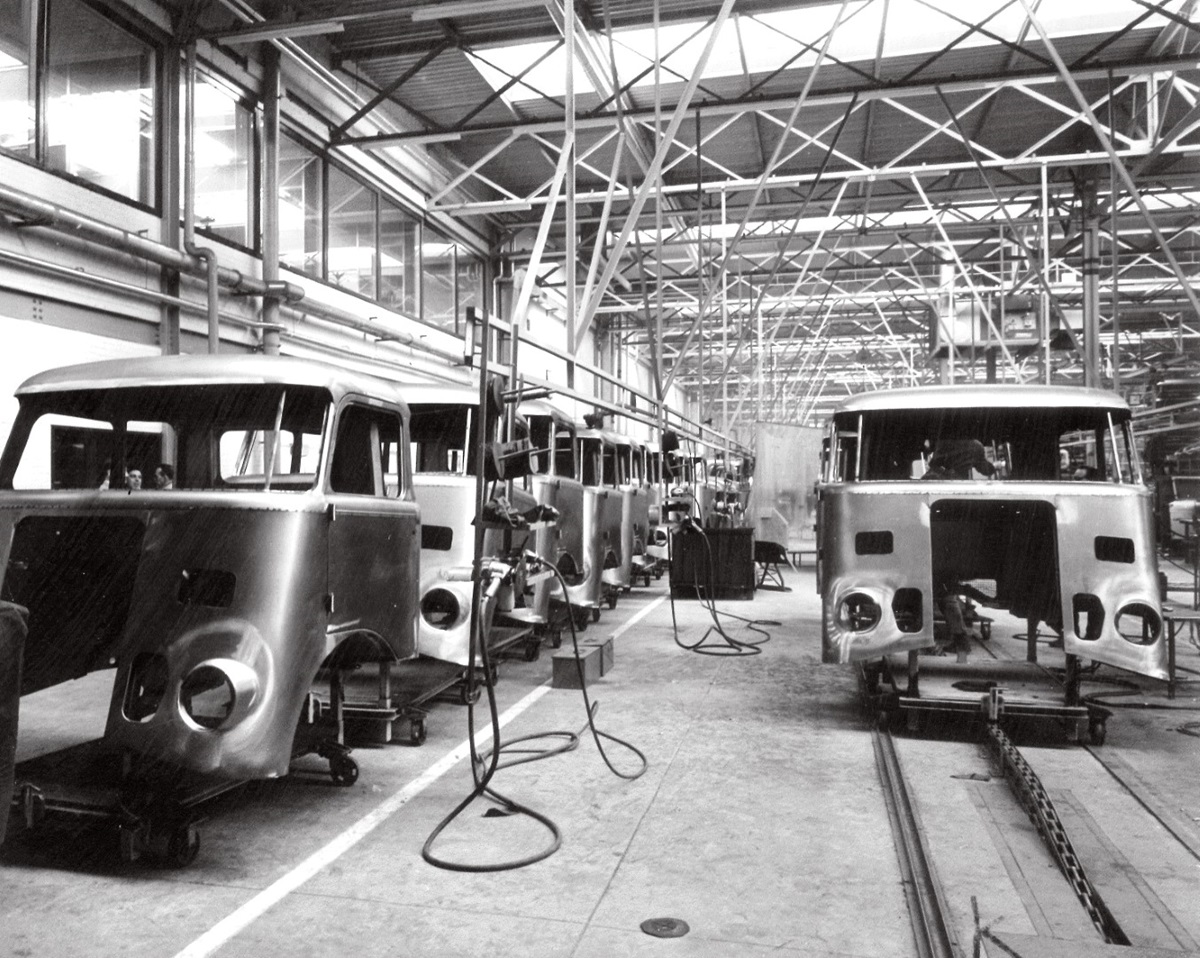
What began in 1966 with four cabs on a single production line has since grown to become one of the most advanced production locations of its kind in Europe. Sixty years after commencing operations, DAF Trucks Vlaanderen in Westerlo, Belgium is now a crucial linchpin in DAF’s international production network. The story of the factory is one of growth, innovation and, most importantly, people.
By Henk De L'Ainge
The roots of DAF production in Belgium lie in the 1960s. In Eindhoven, there was plenty of room to expand but finding the required personnel was difficult. The solution was found across the border in the Belgian Kempen regiom, where DAF purchased land alongside the A13 near Oevel in 1964 and set about building a new factory. On 5 May 1966, the first four truck cabs were rolled off the assembly line and production grew quickly from there. Barely two months later, the 1,000th cab was transported to Eindhoven. In the same year, DAF Vlaanderen was in a position to produce every type of cab and the factory was running at full capacity.
‘MADE IN BELGIUM’
Since then, ‘Made in Belgium’ has been an unmistakable part of the DAF label. The factory grew at a rapid pace and was given an extra boost in 1971 when the axle production was moved from Eindhoven to Westerlo. Investment in the plant continued unabated in the decades that followed. In the 1980s, an ultramodern cab painting facility was built (the most advanced of its kind at the time). It was further evidence of DAF’s pursuit of a clear strategy: developing and producing essential components such as axles at its own plants in order to guarantee the highest quality and optimal performance.
INVESTING IN THE FUTURE
Over the past ten years, the pace of innovation has continued to accelerate. DAF invested over 650 million euro in the factory in Westerlo, including for the production of the newest generation of trucks. The results of these investments are plain to see all over the complex. For instance, the factory now boasts a state-of-the-art cab painting facility almost 150 metres in length that can handle 3,000 different colours. Thanks to advanced technology, emissions have been halved and the amount of paint used reduced to a minimum. Environmental concerns have always been a top priority in the development of the cab painting facility. Thanks to the advanced cab painting systems, emissions have been reduced by 50% and the newest technologies are being used to purify the air that leaves the spraying facilities.
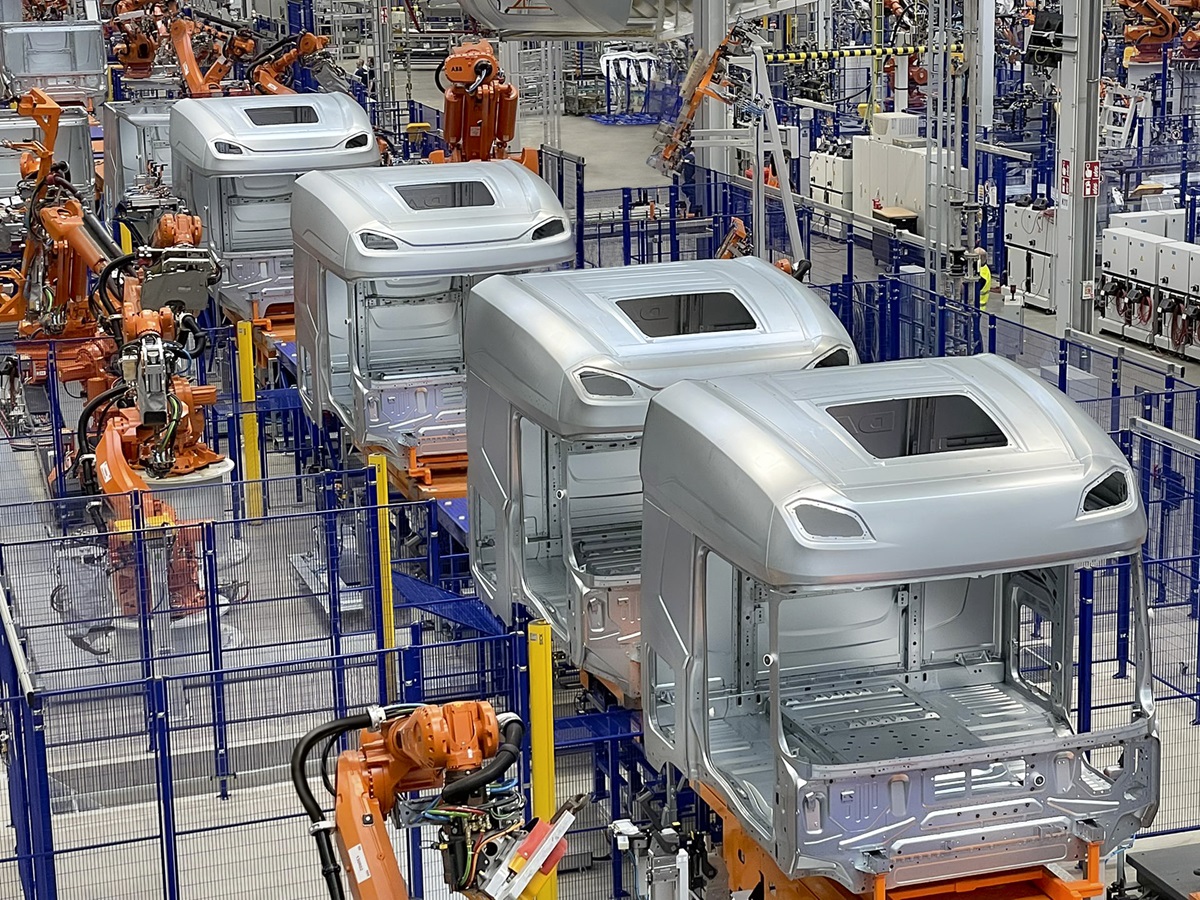
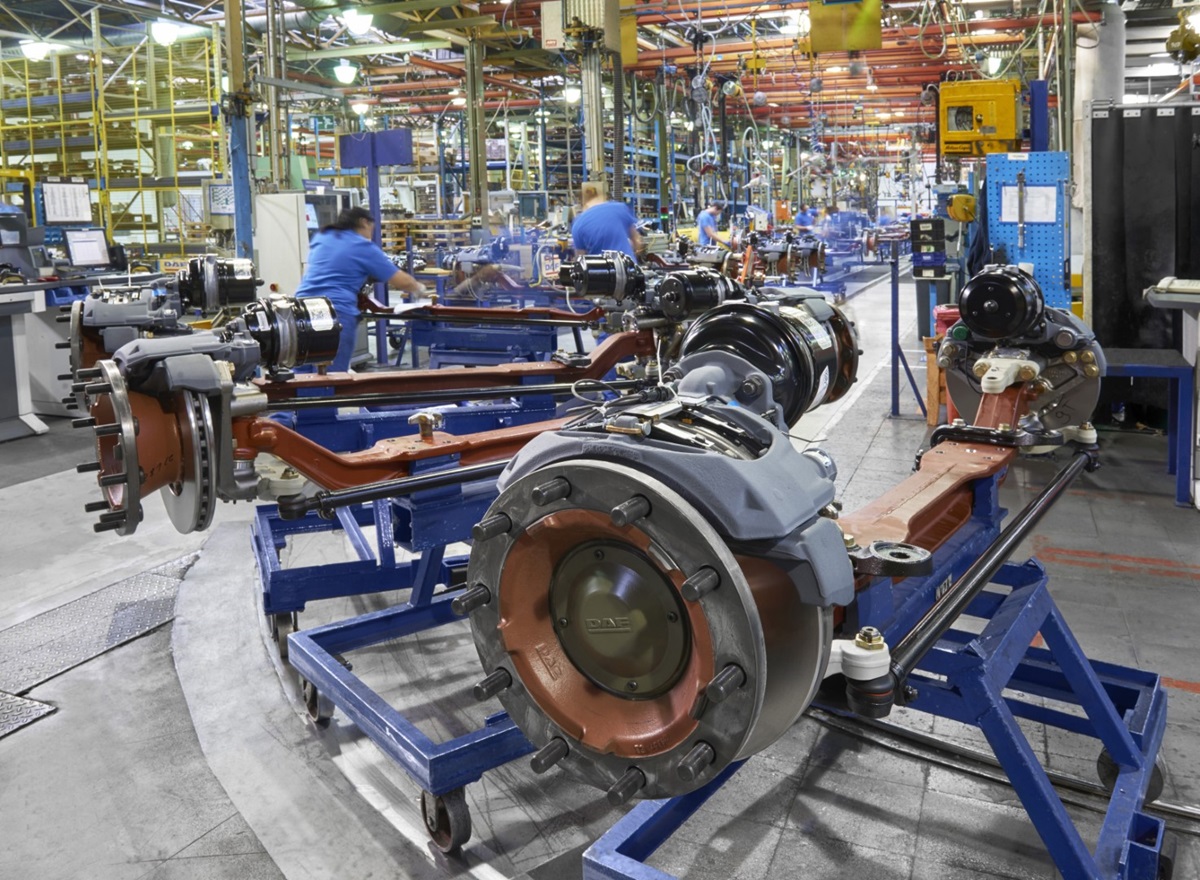
The production of cabs has also been heavily automated. Up to 145 robots work together in the Body division to assemble the cabs, after which they are finished according to the customer’s specifications at the Trimming division. Close attention is paid in this process to ergonomics and working conditions: lots of light, low noise levels and fully adjustable workstations. In the axle factory, fully automated production lines ensure a higher output and a consistently high level of quality. Advanced spraying robot technology reduces the usage of paint, which has an additional beneficial impact on the environment.
FACTORY OF THE FUTURE
This combination of technological innovation, sustainability and attention to the needs of workers has not gone unnoticed. In 2024, DAF Trucks Vlaanderen was named ‘Factory of the Future’ by the Belgian technology federation, Agoria. Today, the factory operates exclusively according to the just-in-time principle. Cabs and axles are delivered to the assembly lines in Eindhoven and British Leyland exactly at the right moment and in precisely the correct order. The PACCAR Production System, in which continuous improvement and worker commitment are the key to success, plays a key role in this process.
IMPRESSIVE
The impressive production numbers underline how far DAF Westerlo has come since 1966. In 2021, the three-millionth axle was rolled off the production line and the milestone of 1.5 million cabs is expected to be reached this year. Jos Habets, member of the DAF Board of Management with responsibility for Production: “Sixty years of production in Belgium is a tribute to the generations of employees who have made DAF what it is today in Westerlo: an ultramodern, future-oriented production location. And, of course, it is also an acknowledgement of the efforts of the 2,000 employees working there today, as well as the one thousand suppliers, including four hundred in Belgium, with whom we currently work. It is thanks to their hard work and commitment that we are able to build trucks that are number one when it comes to reliability, comfort and quality. Our continued investment in DAF Trucks Vlaanderen N.V. guarantees a bright future for our factory in Belgium.”
READY FOR THE NEXT SIXTY YEARS
With a combination of innovative thinking, sustainable technologies and expertise, the factory in Westerlo has grown to become a crucial link in the chain at DAF. What once began as a solution for a capacity problem is now a shining example of modern industry. And if DAF has its way, those first sixty years are only the beginning.
“AN EXAMPLE FOR THE REST OF THE COUNTRY”
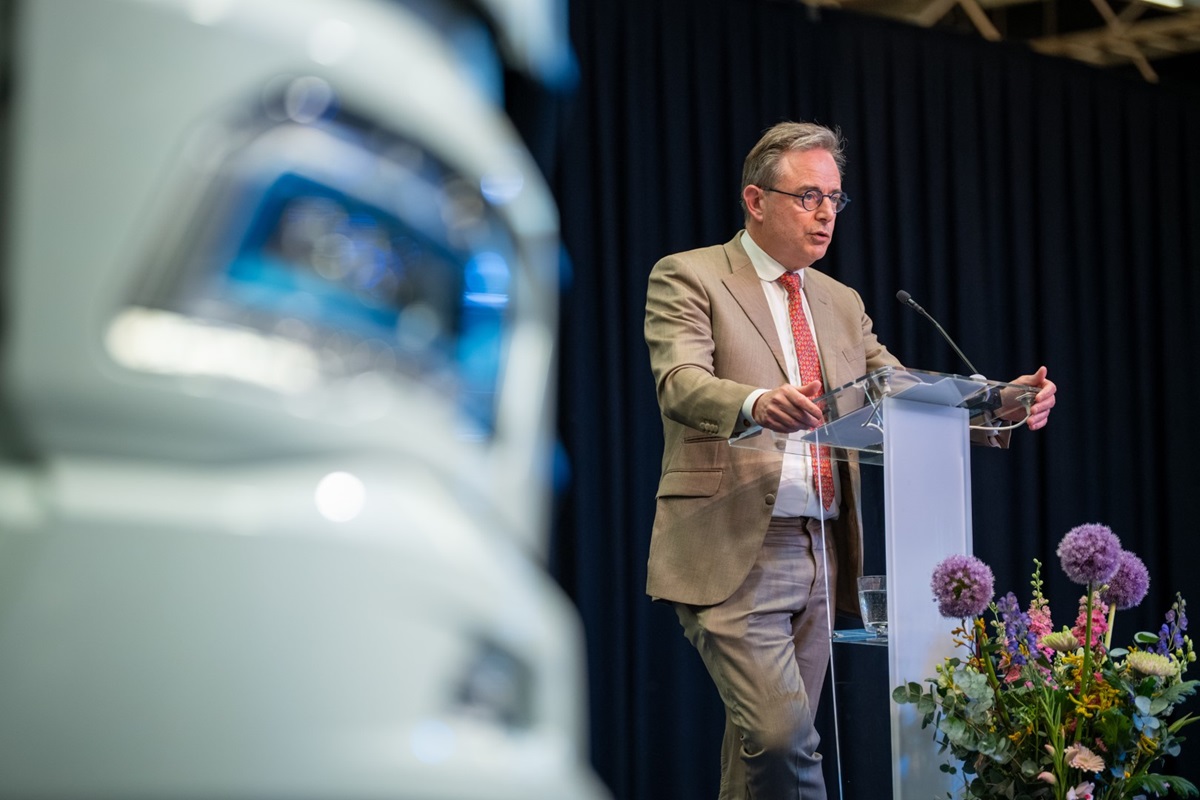
The 60th anniversary celebration was the perfect opportunity for the Prime Minister of Belgium, Bart de Wever, to visit DAF Vlaanderen. He was clearly very impressed: “Our industry is going through difficult times,” he commented. “But the DAF story demonstrates that the will to invest and display courage when required can steer us towards a better future. DAF is an example for the rest of the country!”
From reactive to predictive: maximising uptime for our customers
For years, the concept of After Sales at DAF was understood to mean everything that happened after a truck had been sold to a customer – repairs and maintenance, primarily. This concept no longer met the needs of a modern organisation in 2026 and so the term ‘After Sales’ was recently swapped for ‘Uptime Services’. According to Twan Winters, there’s a lot more to it than just changing the name. “It represents a fundamental shift in how we support our customers.”
By Henk De L'Ainge
WHY THE NAME CHANGE?
“After Sales only really described our position in the process after the sale of a truck. However, we want to mean a lot more than that to our customers. With the new name, Uptime Services, we are making our priorities very clear: helping our customers to keep their trucks on the road, maximising their productivity and facilitating smooth operations. It’s not about having a new name on the door, but about finding a new way of working. Much more proactive, more strategic and fully customer-oriented.”
“Our mission is clear: maximum uptime at the lowest possible total cost of ownership. We are committed to preventing
unplanned downtime as opposed to solving problems afterwards."
Twan Winters,
DAF Director Uptime Services
WHAT DOES THIS PROACTIVE APPROACH MEAN TO THE CUSTOMER ON THE GROUND?
“Our mission is clear: maximum uptime at the lowest possible total cost of ownership. We are committed to preventing unplanned downtime as opposed to solving problems afterwards. For our customers, this will mean increased productivity and effective cost prediction. To make our new vision a reality, we have set an ambitious goal: creating a situation in which a truck will only require one scheduled service in a calendar year.”
HOW WILL DAF ACHIEVE THIS AND WHAT ROLE WILL DIGITAL TECHNOLOGY PLAY?
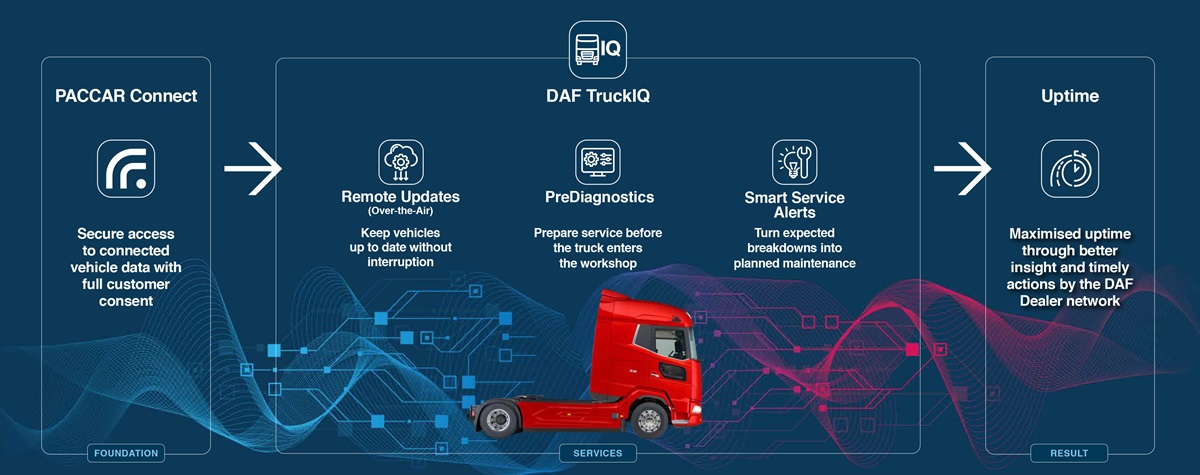
“Digital technology will play a key role in enabling us to achieve our goal. Under the name DAF TruckIQ, we've integrated the truck into an ecosystem of Connected Services based on PACCAR Connect: Remote Updates, Smart Service Alerts and PreDiagnostics. This will allow us to transition from reactive maintenance to predictive maintenance. Connected Services allows us to see what is happening in the field, identify patterns and act before a problem arises. And if required, the dealer can make all the necessary preparations for a visit to the workshop in advance.”
CAN YOU IDENTIFY THE ACTUAL BENEFITS FOR THE CUSTOMER?
“Certainly. Take Remote Updates, for example. It allows us to remotely install software updates, so the customer doesn’t have to come to the workshop and the truck is always up-to-date. It guarantees optimal performance without any unnecessary interruptions. It”s a win-win for the customer. Then there”s PreDiagnostics. The dealer knows exactly what work the truck requires before it even arrives at the workshop. Parts can be sourced in advance and that shortens the amount of time the truck has to be on site. Good for the customer and good for the dealer, too, because they can then run a very efficient workshop. With Smart Service Alerts we are able to identify risks very quickly and have a truck come to the workshop before a possible malfunction occurs. This means maximum vehicle availability and optimal control for the customer.”
MORE PREDICTABILITY, IN OTHER WORDS?
“Exactly. Expected breakdown is transformed into planned maintenance and that is the essence of Uptime Services. I hardly even need to explain what the benefits are to the customer: improved vehicle availability, lower costs and greater reliability in logistics. And for the driver: greater comfort because they will always be sitting at the wheel of a perfectly maintained truck.”
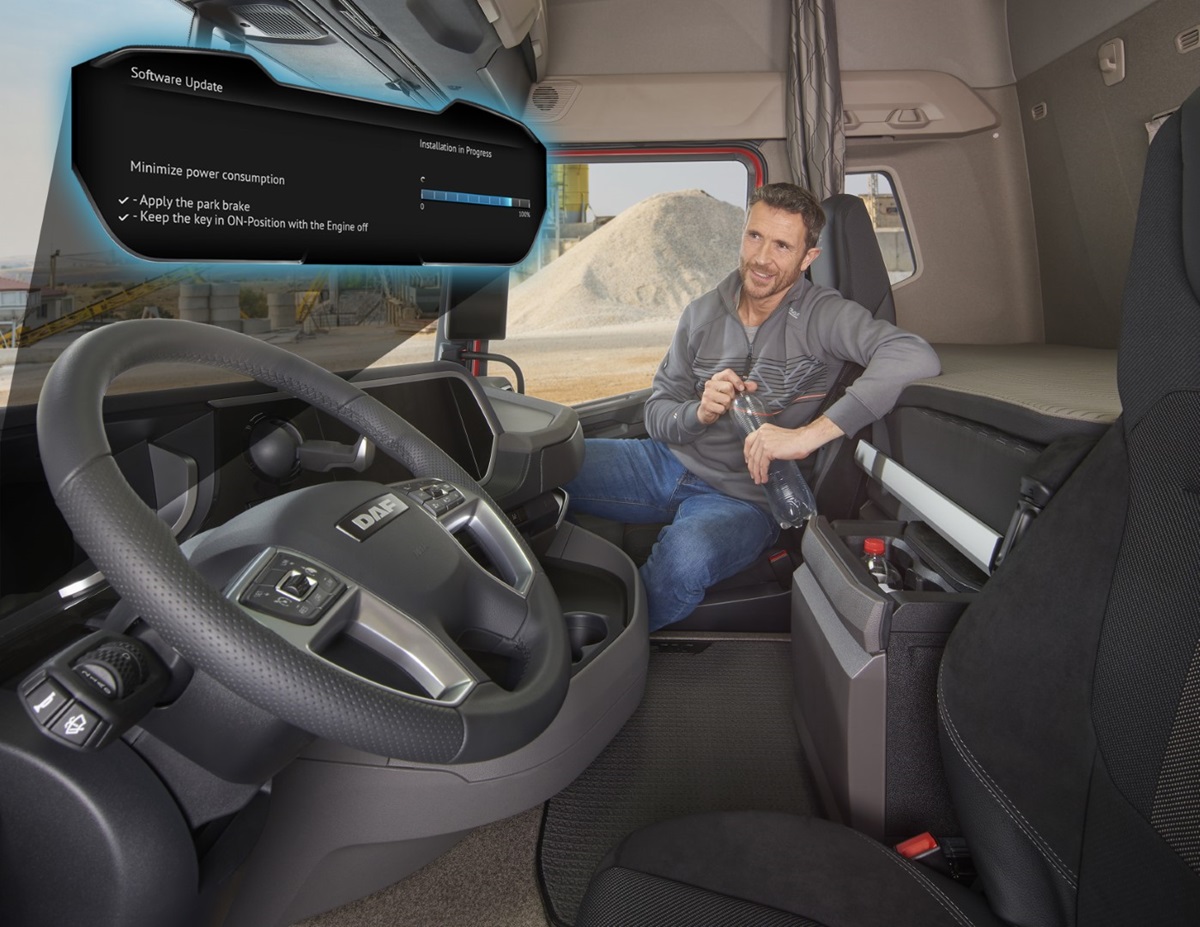
Remote Updates remotely installs software updates, so the customer doesn’t have to come to the workshop and the truck is always up-to-date.
HOW WILL THIS AFFECT THE RELATIONSHIP BETWEEN DAF AND ITS DEALERS?
“Dealers will remain crucial. In fact, their role will become even more important because, thanks to DAF TruckIQ, dealers will have a better picture of the technical status of their customers’ trucks. This will allow them to be proactive in their contact with customers, provide advice and prepare for any required maintenance. We are actually building a triangular relationship between DAF, our dealers and the customer. And together we are working to create an integrated service chain that is fully focussed on uptime.”
WHY IS THAT SO IMPORTANT?
“Our new way of working is directly linked to the success of our customers. Each minute that a truck is driving, it is earning money. That’s why we no longer see service as a supporting function but as a driver of customer success.”
FINALLY, WHAT CAN WE EXPECT IN THE COMING YEARS?
“A service network that is increasingly smart, connected and predictive. We will continue to invest in data, connectivity and digital solutions. But always with one goal in mind: helping customers to get the most out of their trucks and operations. To sum up, Uptime Services is about one thing: keeping our customers on the road and making them more efficient, reliable and profitable than ever before. I’m proud to be able to change my job title from Director After Sales to Director Uptime Services.”
Building the future
The world of transport never stands still. Electrification and digitalisation amongst others are rapidly changing the way transport companies do business. At DAF, we see these developments as opportunities that will help us to make our customers even more successful. And that is exactly what you will be reading about in this new edition of DAF in Action.
At IAA Transportation 2026, DAF will be presenting an impressive package of innovations: new electric and diesel trucks, smart digital services and innovative solutions aimed at making transport safer, more efficient and more profitable. Our new DAF Truck IQ Services are set to play a key role in this. With predictive maintenance, real-time vehicle data and smart service solutions, we will help transporters to optimise vehicle availability and get the most out of their trucks.
Innovation only really becomes meaningful when it creates value on the ground. That’s why we will be introducing you to customers who are already shaping the future today. We’ll be taking you to Germany, where long distance electric transport is now becoming a reality. And to Colombia, where DAF trucks are playing a crucial role in the logistics requirements of a leading global player in the banana export market. In Belgium, DAF Trucks Vlaanderen has been proving for the past sixty years that constant investment in people, technology and quality is the cornerstone of continued success.
There is a common theme running through this entire edition: progress is fuelled by cooperation, innovation and the ambition to improve every single day. And that is exactly what drives DAF on. Together we are building the future of road transport.
Jim Walenczak
President
DAF Trucks N.V.
Calling card for global player
It is quite likely that the bananas in your fruit bowl at home are from Colombia. And probably from Urabá, the country’s most important banana-producing region. Banafrut is the largest banana producer in Urabá and it relies on DAF for the transport of the popular fruit.
By: Henk de Lange
As the major banana-producing region in Colombia, Urabá accounts for 60 to 65% of the country’s banana export. The banana business actually makes up 85% of the region’s economy, where the high humidity and steady temperatures produce an environment that is ideal for growing the bendy fruit. Add in the robust export infrastructure, including a large port, and it’s easy to
BANAFRUIT
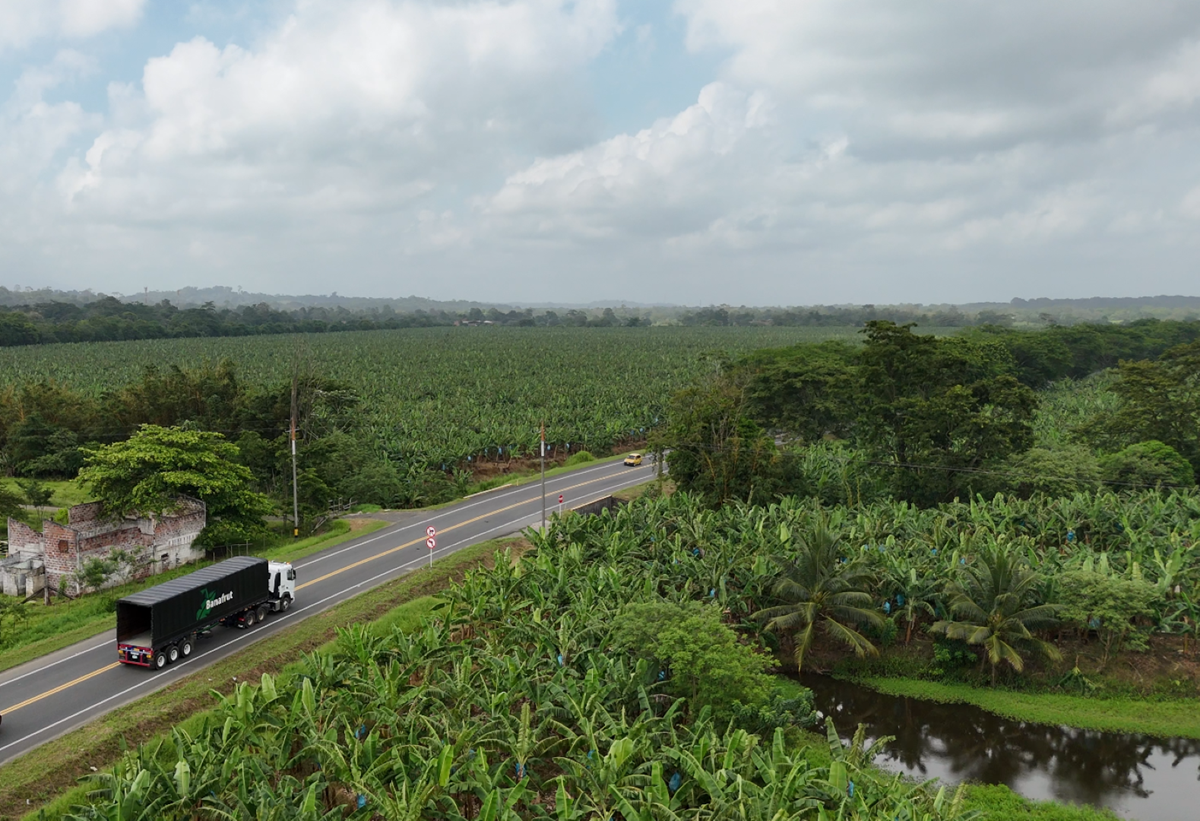
As the largest banana producer in the region, Banafrut manages 35 plantations that cover a combined total of 3,850 hectares – as big as a medium-sized city in Germany. Some plantations even have their own airstrip. Growing bananas is very labour intensive and Banafrut has around 2,900 employees who work in their fields to harvest 10 million boxes of bananas each year.
FIRST CUSTOMER OUTSIDE EUROPE
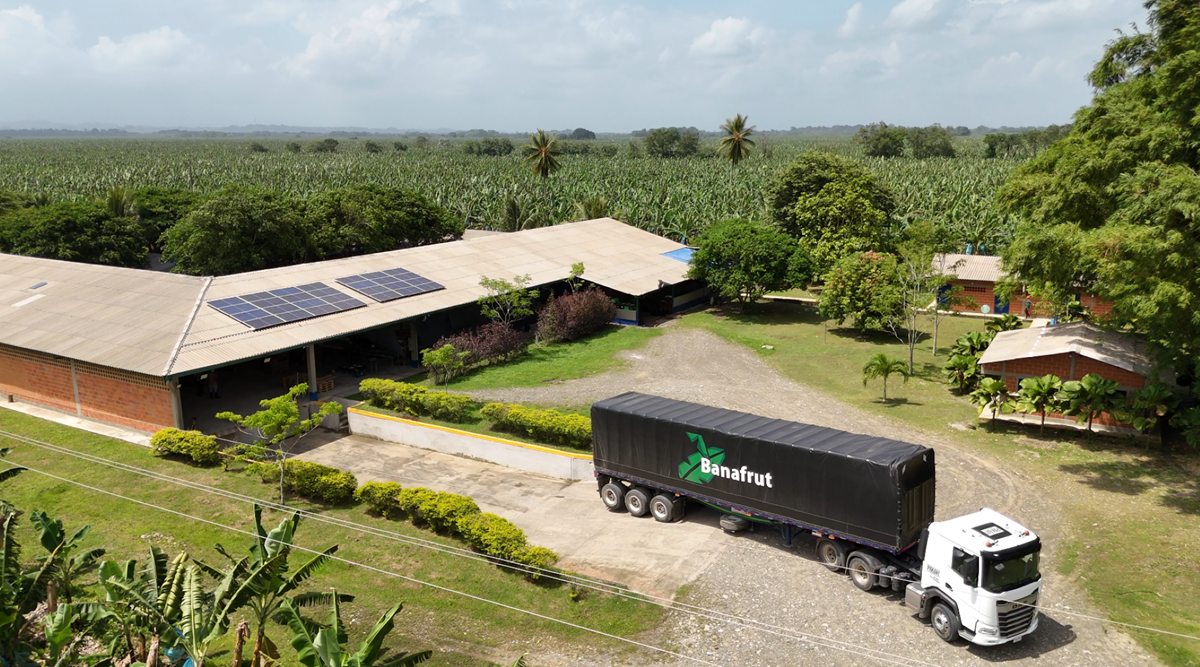
All of these bananas have to be brought to the port, from where they are shipped to places like the UK, Germany, Poland, the Netherlands and Belgium. Banafrut looks after transport to the port using a fleet of 17 trucks, four of which are three-axle 6x4 New Generation XF530s from DAF. Banafrut started using the vehicles this year and in so doing became the first DAF customer outside Europe to add the New Generation DAF to its fleet.
WHY DAF?
Member of the board Federico Martínez explains why Banafrut chose the XF: “Where do I start?” he says, laughing. “One of the main reasons is that they are equipped with PACCAR engines, which we already knew from our Kenworth trucks. We do a lot of the maintenance ourselves, so that’s a big advantage. And they are also very efficient and reliable.”
There were two additional reasons for choosing DAF's three-axle 6x4 models, explains Martínez: “Many of the roads to the plantations are dirt roads that are very steep and have lots of potholes. So they demand a 6x4. And more importantly, a three-axle vehicle gives a smoother ride. Not just for the driver but also for the load. We want to avoid damaging the bananas during transport. Quality is our top priority and that’s what our customers expect.”
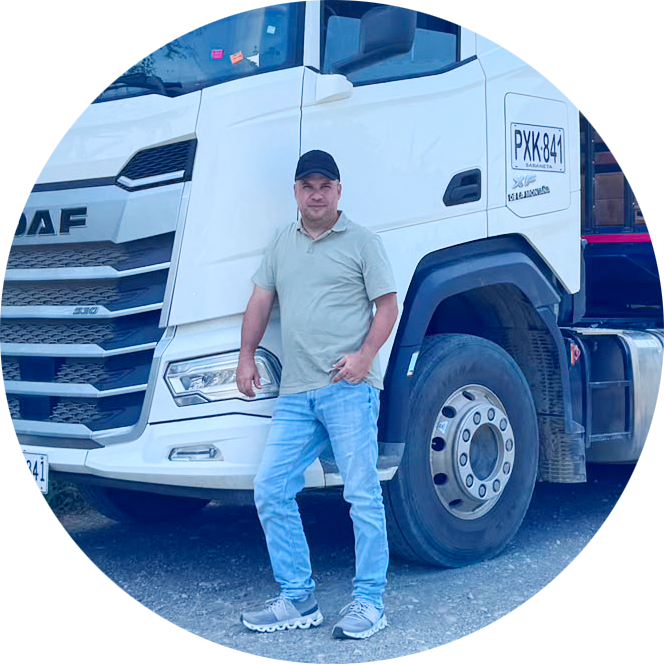
“They are extremely manoeuvrable, which is a big advantage when you’re turning the vehicle in tight spaces at loading docks”
Federico Martinez
SUSTAINABILITY
At Banafrut, sustainability is a key factor. It’s the reason why each banana produced by Banafrut carries the Fairtrade label. The company has also been awarded certification by the Rainforest Alliance and GlobalGAP. “Our policy is reflected throughout the company and that includes logistic innovation,” says Martínez. “Another reason why we chose DAF is because of the emphasis the brand places on sustainability. Not just in terms of emissions, but also fuel consumption. After all, lower fuel consumption is the most effective way of reducing the size of your carbon footprint.”
AND WHAT ABOUT THE DRIVER?
“When we first started using the XF, the drivers were delighted,” Martínez recalls. “The trucks are like spaceships. The comfort, the space – they had never seen anything like it. And above all, they are extremely manoeuvrable, which is a big advantage when you’re turning the vehicle in tight spaces at loading docks."
CALLING CARD
The ultramodern DAFs also stand out among the other trucks on the road in Colombia. “We see them as an important calling card for Banafrut,” says Martínez. “All the more reason to add a fifth truck to the fleet.”
Smart parts logistics keeping trucks on the road
With the opening of a new distribution centre in the German town of Massbach, PACCAR Parts has taken a giant step in the professionalisation of its parts logistics. The 85- million-euro investment has resulted in an ultramodern hub that has raised not only the work rate but also but also the degree of reliability and sustainability to a higher level. For DAF partners and transporters, this means one thing in particular: maximum uptime!
By Frank Hausmann
The PACCAR Distribution Center (PDC), which officially went into operation in 2024, is the twentieth parts warehouse in the global PACCAR network. DAF dealers in Germany, Switzerland and Eastern France are now being supplied through Massbach. As a result, the centre has become a strategic link in the European supply chain, with a focus on the speedy and efficient delivery of parts.
FULLY DIGITAL WAREHOUSE
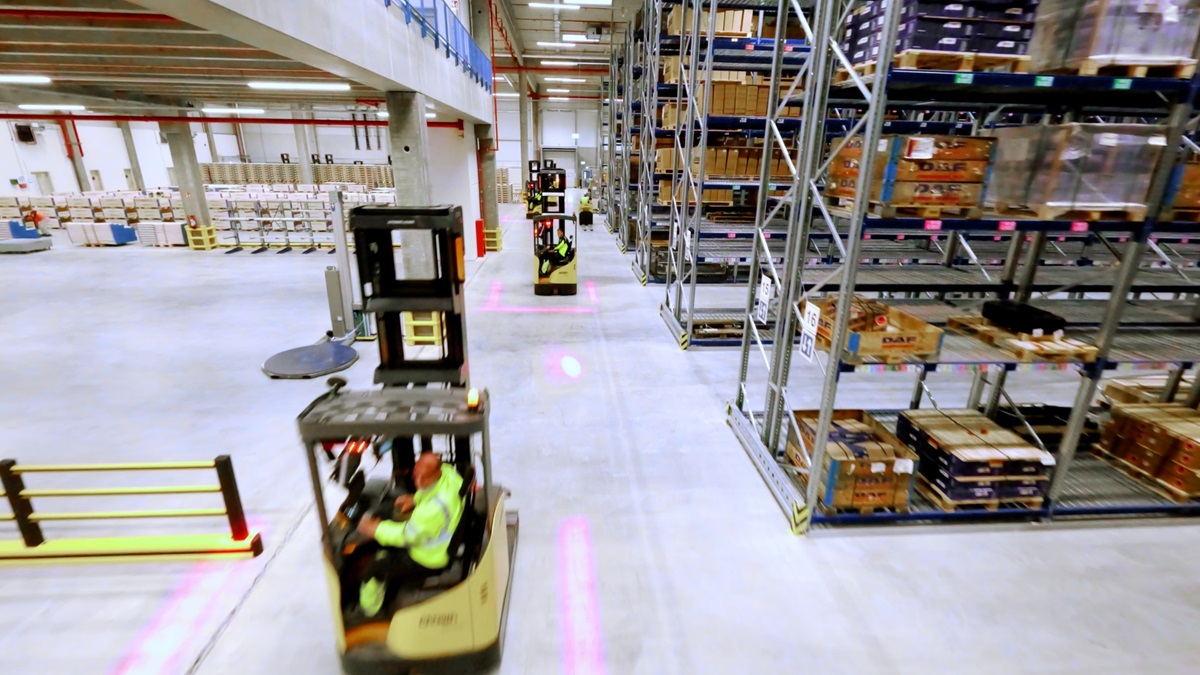
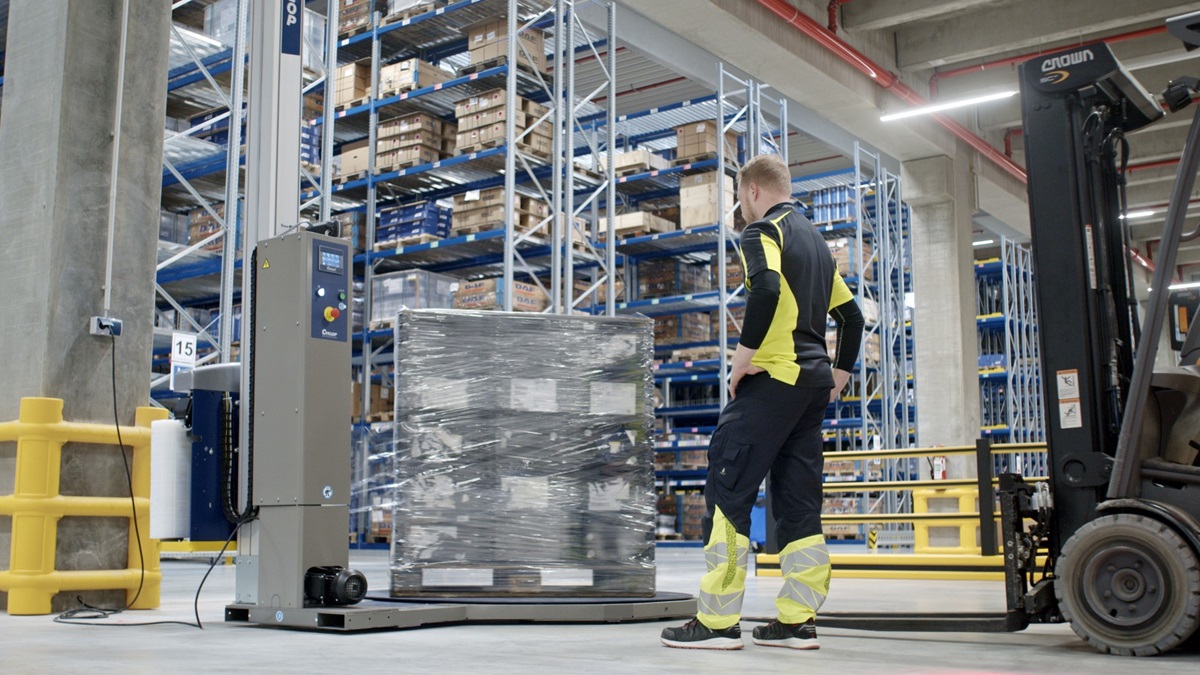
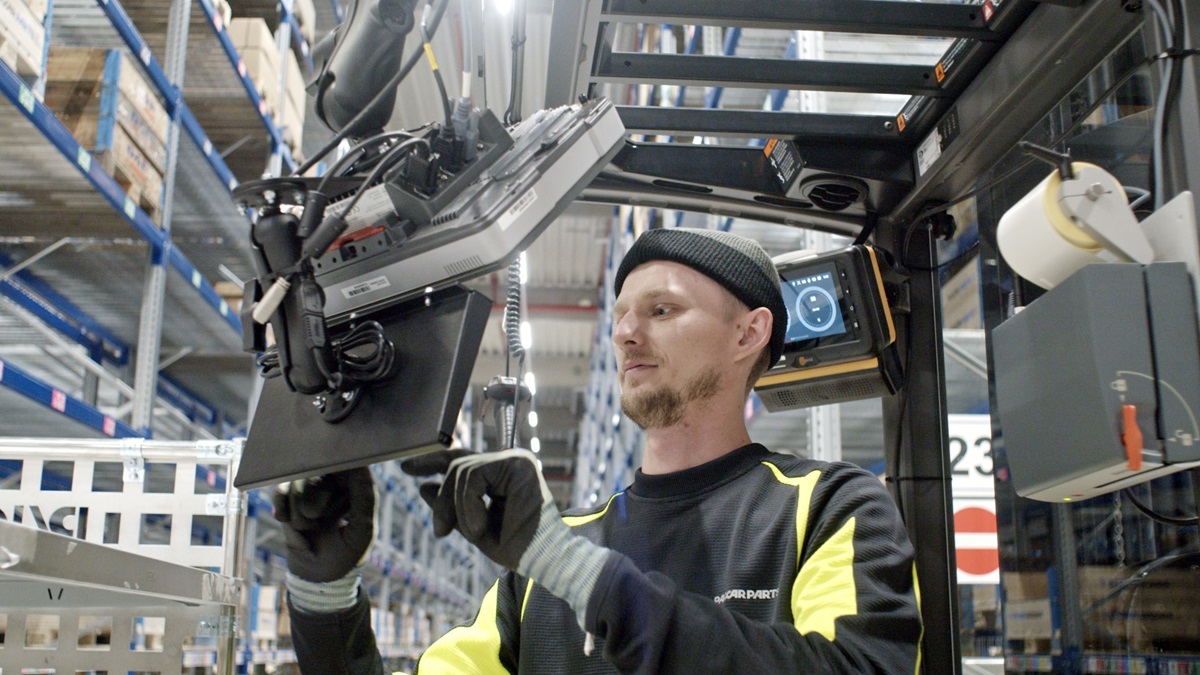
A warehouse complex with 22,000 m2 of storage space was constructed on a 22-hectare plot. It can hold up to 80,000 components, all ready for delivery. The beating heart of the centre is formed by an advanced digital logistics process in which employees make use of voice-directed picking systems. They receive instructions on a headset from the central warehousing system. This allows them to keep their hands free, which makes the work faster and more efficient and facilitates maximum ‘First Time Right’. Modern scan technology also records the movement of each component in real-time while automated packaging lines complete the process.
SHORTER LINES, FASTER SERVICE
The effectiveness of the new centre is due not only to its technology but also to its strategic location. The central location in Southern Germany has shortened delivery times considerably. For DAF dealers, the PDC functions as an external warehouse, which means they can keep their own stocks low. This approach has led to immediate improvements on the work floor. Parts ordered before 8 p.m. arrive at the workshop the following morning. This means that trucks can be put back on the road again incredibly quickly.
KEY ROLE FOR SUSTAINABILITY
In addition to efficiency, sustainability has also played a key role in the development of the new centre. The building was designed as a climate-neutral facility. Almost four thousand solar panels meet the facility’s energy needs, with residual electricity being stored in batteries. Sustainability is also an important factor in daily operations: forklifts and internal transport equipment is fully electric, which results in an emission-free and quiet working environment. Heat pumps are used to keep the PDC at a constant temperature all year round and the roof of the office building is covered in greenery, which provides natural cooling in the summer and retains heat in the winter.
STRATEGIC MILESTONE
With its new distribution centre, PACCAR Parts has underlined its ambition to constantly improve its component logistics and maintain its focus on achieving optimal vehicle availability for the customer.
The PDC in Massbach at a glance:
-
Investment: €85 million
-
Total surface area: 25,000 m2 (or 4 football pitches)
-
Number of solar panels: 3,838, with a total capacity of 1,690 kW. Enough to meet the energy needs of a small town
-
The roof of the office building is covered in greenery, which provides natural cooling in the summer and retains heat in the winter
-
Storage capacity: over 80,000 different parts
Germany invests billions in combatting traffic congestion
Germany has been number one in Europe for many years when it comes to a well-functioning road infrastructure. The country has always been a reliable link in the European logistics chain for transport companies and drivers alike. Today, however, many roads, bridges and motorways are showing considerable wear and tear. The German government is beginning to turn the tide with its programmes of investment.
By Frank Hausmann
The German road infrastructure is facing an enormous challenge. After years of intensive usage and, according to critics, insufficient investment, many roads and bridges are suffering from a lack of maintenance. This represents a huge challenge for a country with over 13,200 kilometres of motorways and almost 38,000 kilometres of Bundesstraßen (major roads). Although these roads form only a limited part of the national road system, they account for almost half of the total number of kilometres driven in Germany. Driving conditions on some sections have deteriorated due to wear and tear, while other sections require major work in order to guarantee road safety and continuity of traffic.
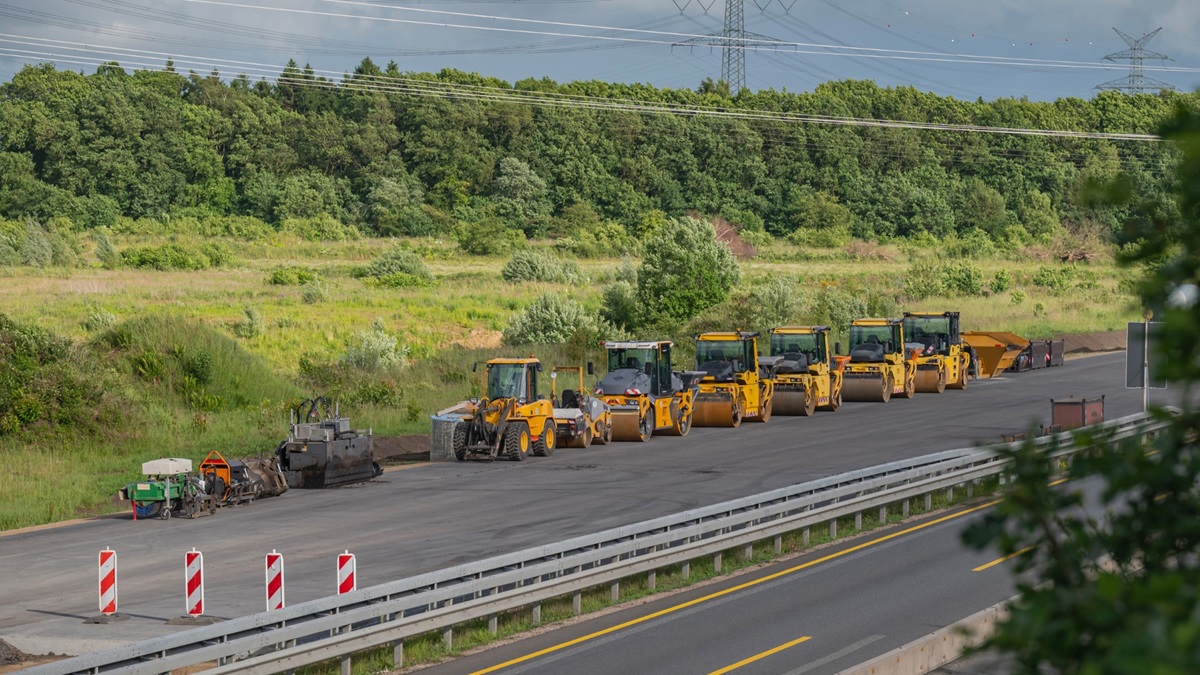
Photo: orinocoArt / Shutterstock.com
RECORD INVESTMENT IN INFRASTRUCTURE
To tackle the problem, the German federal government has announced an extensive investment programme. Around 170 billion euros has been reserved for the national road system for the period 2025-2029. A significant portion of the investment required will come from a fund that has been set up specifically for infrastructure and climate neutrality. 33 billion euros will be made available in 2026 and 2027, almost 25% more than in 2024. Over 14 billion euros has been reserved for the building and expansion of motorways between now and 2029.
BRIDGES CAUSING MOST CONCERN
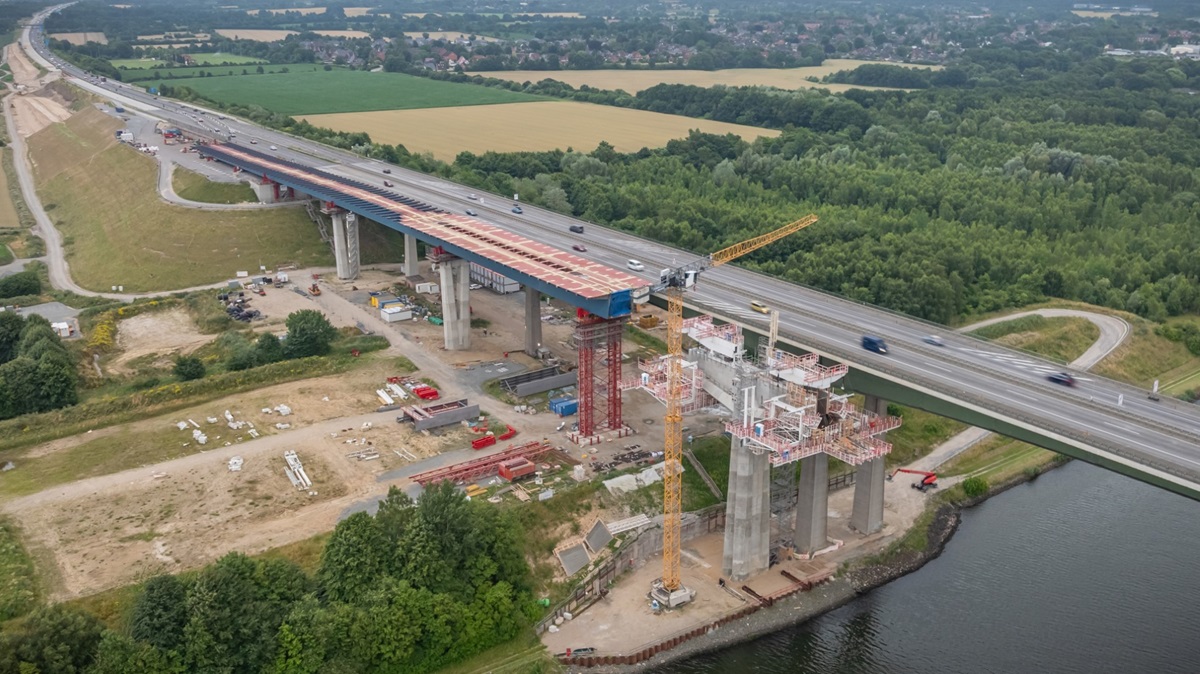
The bridges in German pose the biggest challenge. Around 8,000 of the 40,300 bridges in the federal road system are in urgent need of repair. In an attempt to accelerate the process, the German Ministry of Transport launched an extensive programme of modernisation in 2022 with the aim of renovating or replacing around 4,000 motorway bridges before 2032. The company charged with this project, Autobahn GmbH, is focussing its efforts on more efficient planning processes and the realisation of a special centre of expertise in order to carry out the projects at a faster rate.
"Their programme includes 23 new bridges and 15 major road reconstruction projects"
FASTER CONSTRUCTION
Recent events have underlined the fact that speed is of the essence. In 2026, the Nordbrücke bridge in Bonn, which forms part of the A565 over the Rhine, had to be closed to motorised traffic. 100,000 vehicles use this route every single day but it will remain closed until a temporary bridge has been constructed. The work is planned to finish before the end of 2028. A good example of faster construction is the new Rahmedetalbrug on the A45. The first section of the bridge was opened in 2025, only 26 months after the start of construction. The project is now being used as an example for future construction projects in Germany. The reconstruction of the Rhine Bridge near Leverkusen is also part of the project of modernisation and the first new bridge was opened in 2024. A second bridge is expected to be completed in 2028 and together with the renovation work on the A1 and A3, they form an important project in the development of the road system in North Rhine-Westphalia.
REGIONS SET TO BENEFIT
In addition to the federal investments, Germany has made a special infrastructure fund to the value of 500 billion euro available over a period of twelve years. This will provide federal states and local authorities with the capital they need to considerably upgrade their road systems. 100 billion euro from this fund is earmarked for regional and local projects. North Rhine-Westphalia is taking the lead with a long-term programme that will invest up to 3.5 billion euro before 2036 in reconstructing bridges, renovating roads and improving road safety. Their programme includes 23 new bridges and 15 major road reconstruction projects.
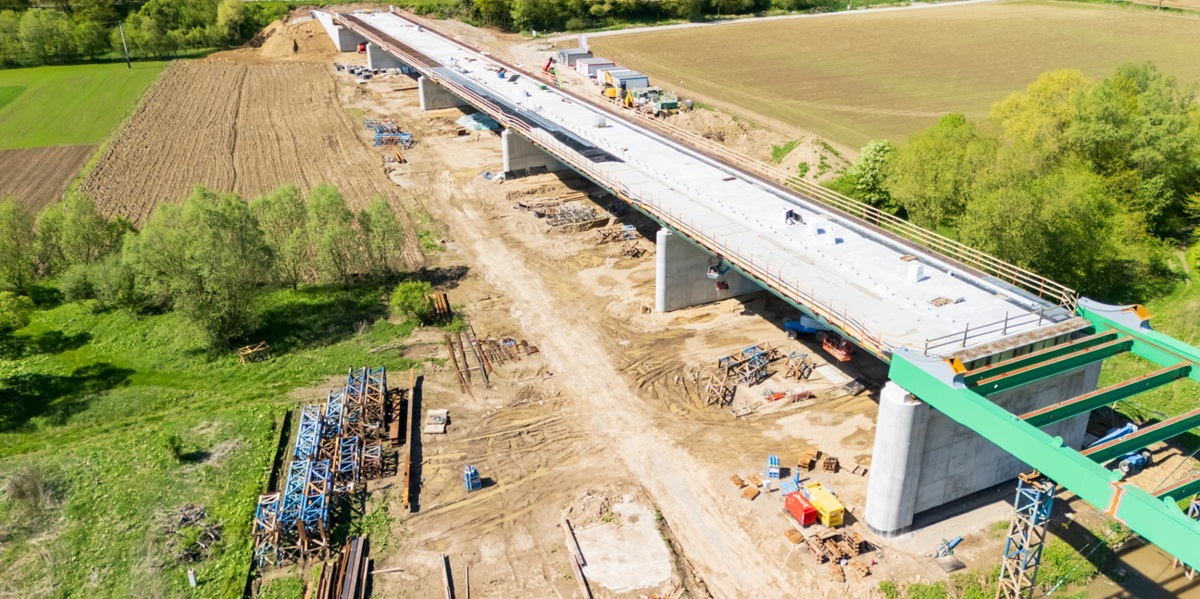
The bridges in German pose the biggest challenge. Around 8,000 of the 40,300 bridges in the federal road system are in urgent need of repair.
STRATEGIC FOR EUROPEAN LOGISTICS
Some of the investment will be focussed on projects of international importance. One particularly eye-catching project is the Fehmarnbelt tunnel between Germany and Denmark. The aim of this 18-kilometre-long tunnel for road and rail traffic is to dramatically improve the flow of traffic between Scandinavia and Central Europe from 2031 onwards and accelerate the transport of goods between Northern and Central Europe. For transport companies, the German investment programme will mean significant delays in the short term as a result of roadworks and diversions. In the longer term, the projects should ensure a more reliable road system, less traffic congestion and an improved flow of international goods. In short, a faster, safer and future-proof European transport network.
DAF at IAA 2026
IAA Transportation 2026. The largest truck and transport exhibition in Europe. With a full series of new axle configurations, smart digital services and a focus on driver comfort, DAF is presenting an impressive range of innovations. The common theme: transport efficiency. Not as a stand-alone technology but as an all-encompassing philosophy.
By Henk de Lange
IAA Transportation Hannover: DAF paints a clear picture for visitors of the direction in which the Dutch truck brand is evolving. Innovations have been made across almost the entire product range: from electric vehicles for long haulage and specialised construction trucks to digital services aimed at improving vehicle availability and new options that will make the driver’s work even more comfortable. All of the innovations have been developed with one thing in mind: helping transporters to further increase their revenue by reducing operational costs, ensuring maximum uptime and increasing their efficiency per kilometre.
ELECTRIFICATION ACCELERATING
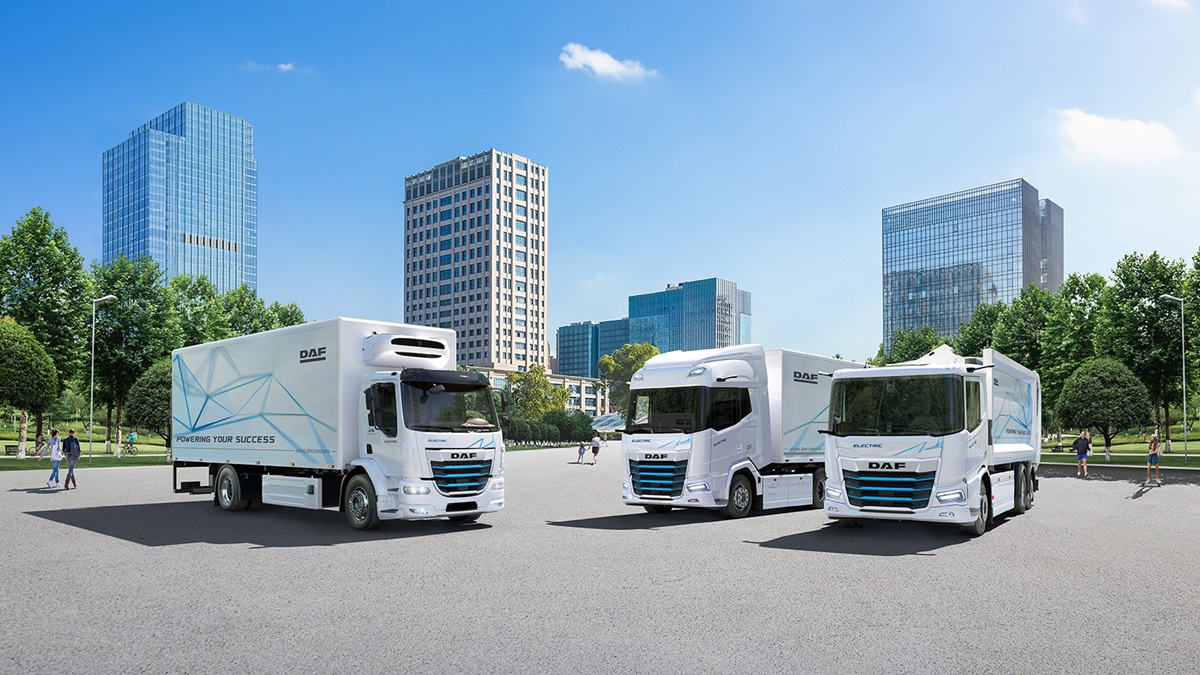
One of the most impressive eye-catchers at the DAF stand is without a doubt the extensive range of electric DAF trucks. Only a few years ago, electric trucks were generally regarded as suitable only for urban distribution. Today, DAF is demonstrating that zero-emission transport is possible in virtually every segment and the introduction of the new XG and XG+ Electric represents an important milestone in this process. With these models, the range of electric trucks is being expanded to include the top segment of international long distance transport. The new vehicles are based on the same technology used in the XD and XF Electric models, which have received global recognition for their powertrain, battery technology and driver comfort. Thanks to their efficient powertrains and modular battery packs, they can now cover distances of over 550 kilometres on a single charge. As a result, more and more transport applications are becoming feasible with zero exhaust emissions.
EIGHT-YEAR WARRANTY
The choice of LFP (Lithium Ferro Phosphate) batteries is another outstanding feature. These batteries contain no cobalt or nickel, have a high thermal stability and can be charged up to 100 per cent without adversely affecting their lifespan. DAF also offers an eight-year warranty on these batteries, which will help giving transporters extra confidence about making the transition to electric transport.
AN ELECTRIC SOLUTION FOR EVERY APPLICATION
DAF is clearly demonstrating that electrification is not confined to standard applications alone and is presenting a broad range of new configurations at the IAA. They include electric 6x2 tractors with a steering front or rear axle that can handle heavy distribution tasks in which a high load capacity needs to be combined with excellent manoeuvrability. DAF is also introducing a 6x2 rigid with a 10-tonne double-mount rear axle for container and tipper systems. And for heavy construction work, DAF now offers fully electric 6x4 and 8x4 models with driven tandem axles.
SPECIALLY FOR THE BDF MARKET
Solutions are also being developed for very specific markets. A good example is the new electric chassis for the German BDF market. Thanks to the clever positioning of the battery packs, the chassis remains fully compatible with swap bodies, while at the same time retaining optimal performance in terms of range. As a result, DAF can now offer trucks that are unique in this segment.
ENHANCED PAYLOAD
One of the biggest challenges presented by electric trucks is the weight of the batteries. To tackle this, DAF is investing
heavily in smart weight distribution. The existing XD, XF, XG, and XG+ electric models already benefit from European regulations that allow the permissible total weight for electric vehicles to be up to two tonnes higher. In combination with smart weight distribution, this can result in a load capacity that is 500 kilograms higher than permitted for comparable diesel models.
DAF has gone one step further at the IAA. Repositioning the batteries and removing the battery pack from under the cab results in a 700 kilogram reduction in the load on the front axle. This leads to a more optimal weight distribution and can even increase the overall payload by as much as 2.5 tonnes for certain applications. The result for transporters is greater productivity per trip.
ENERGY TRANSITION NOT EXCLUSIVE TO TRUCKS
The transition to zero-emission transport is not just about vehicles. The electric programme is also backed up by an extensive package of services. Transporters can avail of tailor-made advice regarding the electrification of their fleet, while PACCAR Power Solutions offers solutions for charging infrastructure and energy storage. DAF has positioned itself as a partner in their customers’ efforts to meet all of their energy transition needs.
DIESEL REMAINS LEADING
Although electrification is attracting a lot of attention, DAF is still committed to the development of diesel trucks. For many applications, the diesel engine will continue to be the logical choice for many years to come. For that reason, the programme of XD, XF, XG and XG+ diesel trucks will be expanded further. New axle configurations will ensure that vehicles will be finetuned even further to fulfil specific transport tasks. The goal remains the same: optimal combination of load capacity, efficiency and vehicle availability.
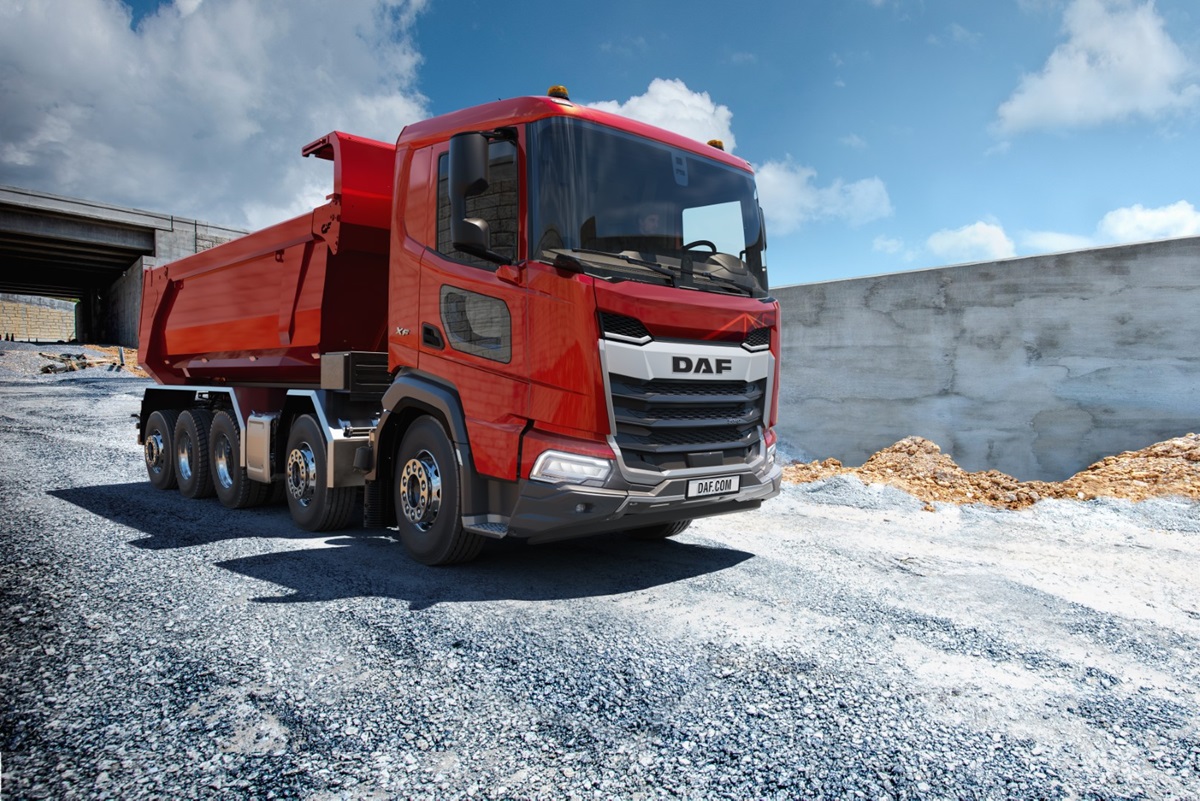
One of the most eye-catching developments is the new 5-axle 10x4 configuration for heavy-duty application, particularly in the construction sector. The vehicle is equipped with two steering front axles and a tridem at the rear with powered tandem axles and a liftable steered trailing axle. Thanks to this configuration, a GVW of up to 54 tonnes is now technically feasible without making any concessions in terms of manoeuvrability.
NEW OPPORTUNITIES FOR CAR TRANSPORT
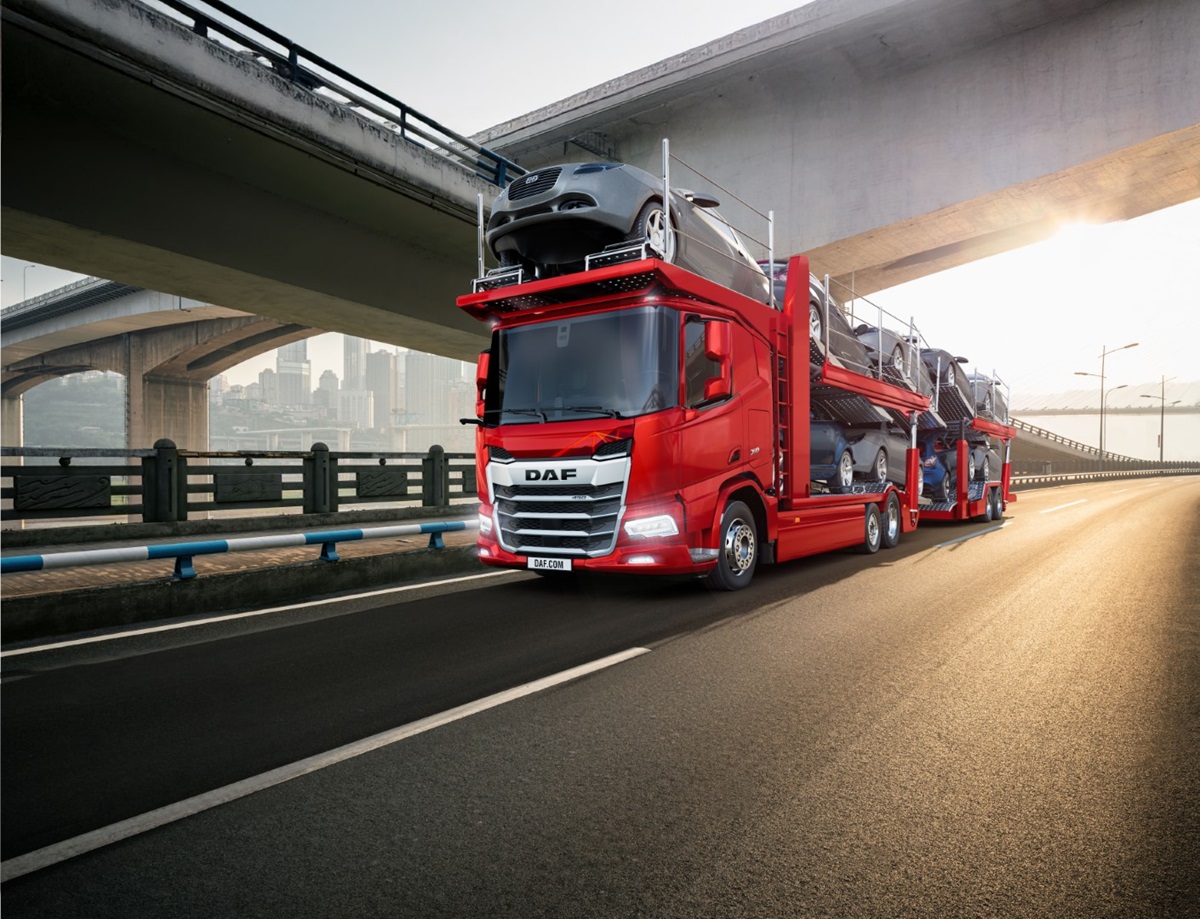
Special attention is also being paid to the car transport market, including the introduction of a chassis with an extremely low deck height of only 83 centimetres. This will provide car transporters with extra loading space within the legal maximum vehicle height of four metres. Adjustments to the wheel suspension and the use of low-profile tyres results in greater flexibility for the transport of cars. These solutions will be available in the XD, XF, XG and XG+ series. There will even be models of the XD available with a lower or slanted roof so that vehicles can be loaded above the cab.
DRIVER REMAINS CRUCIAL FACTOR
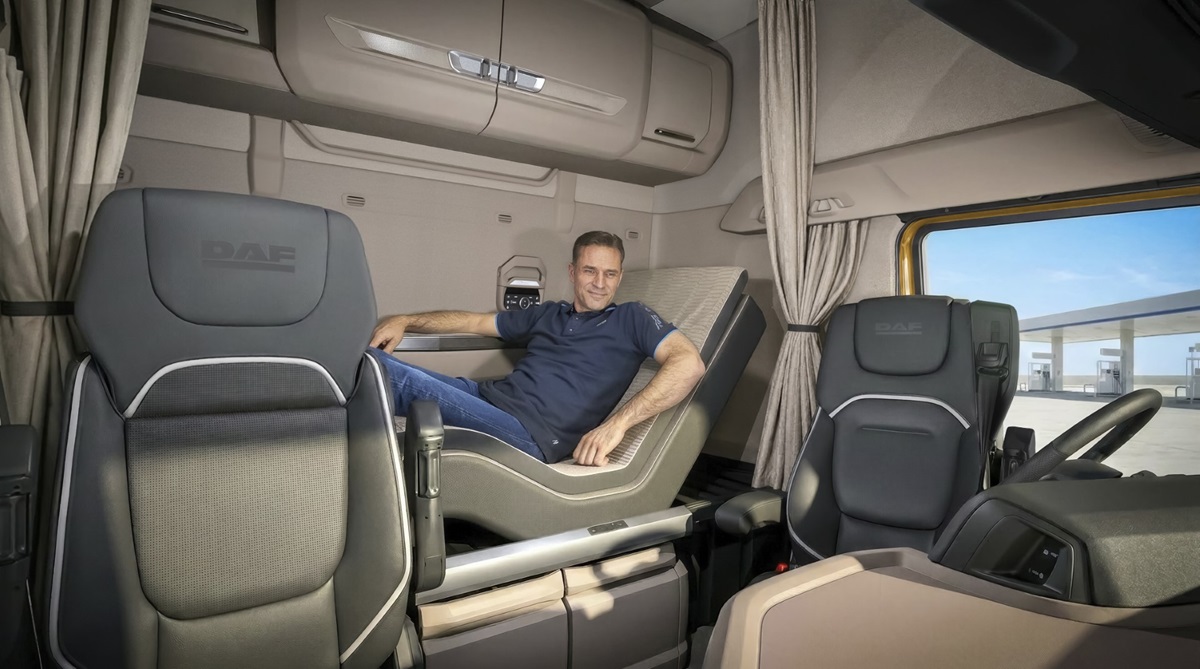
No matter how advanced trucks become, it is the drivers who ultimately determine the success of transport companies. This is why DAF is investing heavily in comfort and the new XG and XG+ are without doubt the flagship. Thanks to the extra-long cab, these vehicles offer working and living space of up to 12.5 cubic metres and headroom of up to 2.20 metres. This makes them the most spacious cabs currently available on the market. DAF is also introducing a beautifully designed rear wall storage in the XF, XG and XG+ models for applications in which the driver operates the vehicle on their own. This superbly built storage system offers 290 litres of extra space, all of which is illuminated.
RELAX BED
A new Relax Bed measuring no less that 90 centimetres in width is also introduced as part of the new Single Driver Luxury Pack. Sleep comfort from at home now also available in a truck. Thanks to the generous dimensions of the cab, this is all possible without affecting the amount of available living space.
TRANSPORT EFFICIENCY AS COMMON THEME
All these innovations are part of an all encompassing philosophy: DAF Transport Efficiency. It embodies the fact that each truck is built with the same goal in mind: to generate the highest possible amount of revenue for the customer. DAF has not chosen one single technological route, but rather a wide and varied approach in which electric power, efficient diesel technology, digital services, safety and driver comfort all complement and reinforce each other. For transport companies, this means one thing in particular: the opportunity to make their operations more efficient, more sustainable and more profitable.